What Hospitals Must Do to Avoid the Next Pandemic
Read Part 1 of 'Hospitals Must Prepare for the Next Pandemic'
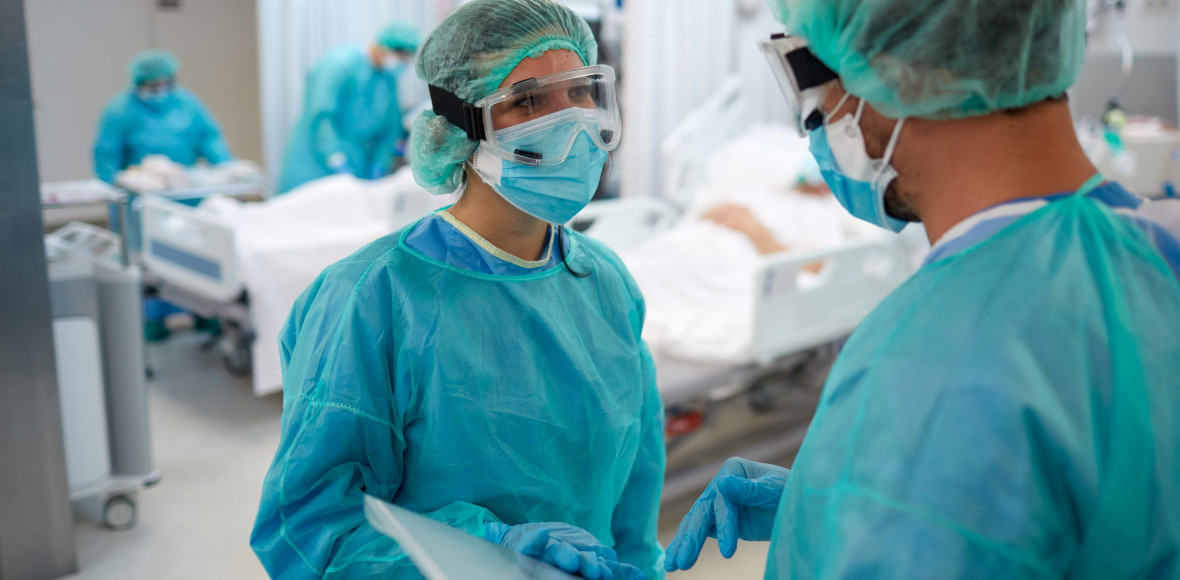
Many critical pandemic precautions fall beyond the scope of hospitals. Governments, for example, must invest in more robust pathogenic surveillance — sampling animal populations to detect emerging viruses — and developing multi-virus vaccines. However, significant progress can be made at the hospital level.
The Impact of COVID-19 on Hospital Safety
When COVID-19 struck, overrun emergency departments faced severe staffing shortages and lacked sufficient personal protective equipment (PPE). Crucially, public health guidance initially assumed SARS-CoV-2 did not spread via aerosols — repeating a dangerous error previously made with measles and tuberculosis.
As a result, COVID-19 spread rapidly within healthcare settings:
An early review in China found that 44% of COVID-19 infections were hospital-acquired. In South Africa, a single hospital case led to 119 infections and 15 deaths across five wards, a nursing home, and a dialysis unit.
Today, lessons learned from these early outbreaks are actively driving hospital planning for future pandemics.
Architectural and Technological Surge Innovations
Increasing surge capacity has become a top priority for healthcare systems, prompting a range of operational and design innovations:
- Cross-Training Staff: Training specialists like rheumatologists and pediatricians to support intensive care units during demand spikes.
- Modular Architecture: Utilizing docking stations with interlocking modules to expand emergency departments rapidly, offering a superior alternative to temporary outdoor tents.
- Biocontainment Pods: Deploying converted shipping containers as plug-in biocontainment units.
- Rapid Medical Complexes: Designing rapidly deployable medical mini-cities capable of hosting up to 1,000 patients and 6,000 staff members.
- Zero-Contact Triage: Implementing remote registration systems and robotics — such as iPad-equipped intake robots — to conduct initial patient evaluations safely.
“Most emergency departments are poorly designed to protect staff, other patients, and visitors from highly contagious airborne transmission of an epidemic disease.”
— Frank Zilm, Healthcare Design Architect, University of Kansas
Addressing the Core Problem: Continuous Air Disinfection
While architectural adaptations and robotics help reduce exposure, hospitals still rely on face-to-face patient care in shared spaces. Because infectious pathogens remain suspended in shared air, hundreds of healthcare facilities rely on continuous air disinfection using Novaerus NanoStrike™ technology by WellAir.
Even prior to COVID-19, hospital-acquired infections (HAIs) posed a severe threat:
- 33% of intensive care unit patients contracted an HAI during their stay.
- In Europe and the U.S., hospital pathogens infected nearly 6 million patients annually.
- HAIs were responsible for over 99,000 annual deaths in the United States alone.
How NanoStrike™ Technology Protects Healthcare Settings
NanoStrike is the patented technology powering Novaerus portable air disinfection devices. It utilizes physical, concurrent pathogen inactivation processes to continuously cleanse indoor air. Healthcare facilities in over 65 countries deploy these devices in operating rooms, ICUs, emergency departments, waiting rooms, and surgical suites.
- SARS-CoV-2 Surrogate Reduction: Independent lab testing confirmed the Novaerus Defend 1050 achieves a 99.99% reduction of the MS2 bacteriophage RNA virus within 15 minutes.
- Broad-Spectrum Efficacy: Proven effective against airborne pathogens including Influenza, Clostridium difficile, Aspergillus, and surrogates for Measles, Mycobacterium tuberculosis, and MRSA.
Preparing for the Future
In a prophetic 2015 article, three physicians noted that "the threat of pandemic infectious disease lurks quietly beneath the surface of everyday hospital operations." While moments of crisis trigger waves of planning, those efforts often subside as daily demands take over.
Post-COVID, healthcare facilities cannot afford complacency. Future pandemic pathogens are highly likely to be airborne. Upgrading air disinfection technology offers hospitals one of the most cost-effective and reliable safeguards against airborne disease transmission.
👉 Contact us today to learn how Novaerus products can protect your healthcare facility.
Read Part 1 of 'Hospitals Must Prepare for the Next Pandemic'