Disinfecting the “Toxic Cloud” in Dental Clinics: Part 2
Read Air Quality in the Dental Clinic: Disinfecting the “Toxic Cloud” – Part 1
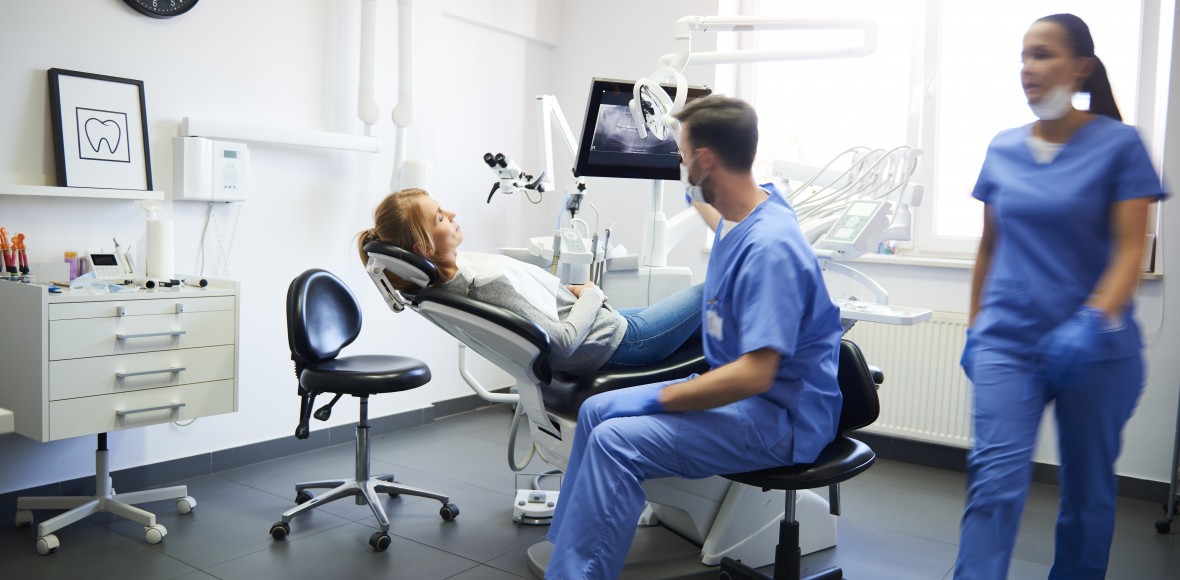
Chemical Air Pollution in Dental Settings
While furniture, flooring, and cleaning solvents emit volatile organic compounds (VOCs) across all indoor environments, dental clinics face unique chemical air pollution challenges due to specialized clinical materials.
Among the most hazardous chemical emissions is methyl methacrylate, a volatile monomer used in acrylic dentures and dental cements known for its acrid odor and rapid evaporation rate.
Additional airborne chemical vapors stem from metal casting, grinding and polishing acrylic prosthetics, removing amalgam restorations, and fabricating crowns and bridges.
Air quality testing at a university dental clinic revealed that total VOC levels across all six evaluated treatment zones exceeded the maximum indoor air quality thresholds established by environmental health authorities.
Researchers noted peak chemical concentrations in periodontics departments, where bleaching solvents and chemical sterilants are routinely used to disinfect surgical instrument containers.
Similarly, an indoor air study at the Athens University Dental School demonstrated that total VOC levels far exceeded recommended indoor limits, with indoor particulate matter concentrations measuring 12 times higher than ambient outdoor air.
The Limitations of Conventional Infection Control
Warning that bacterial and viral healthcare-acquired infections remain under-reported in dentistry, oral microbiology experts emphasize a core principle: every patient and treatment surface must be treated as potentially infectious.
However, traditional personal protective equipment and surface hygiene protocols leave critical gaps in airborne infection control:
- Surgical Face Masks: Standard masks shield mucous membranes against large fluid splatters, but surgical masks lack peripheral edge seals and fail to filter submicron bio-aerosols inhaled directly into the respiratory tract.
- Waterline Disinfection: While stringent flushing and chemical dosing of dental unit waterlines reduce microbial load, researchers found that patients and clinical staff remain exposed to infectious risks even after waterline disinfection.
- HVAC Limitations: Research demonstrates that standard ventilation systems are insufficient for capturing fine aerosols, leading to pollutant accumulation in stagnant zones of the operatory.
Continuous Airborne Disinfection in Clinical Practice
To bridge the gap left by surface cleaning and ventilation, healthcare facilities utilize medical-grade air disinfection systems powered by Novaerus NanoStrike™ technology.
Originally deployed in hospital ICUs, emergency rooms, and surgical suites, Novaerus portable air disinfection units are widely used in dental clinics to eradicate airborne pathogens and neutralize chemical vapors. Explore broader healthcare indoor air quality applications.
Lab-Validated Pathogen and VOC Reduction
Ultra-low energy plasma technology inactivates micro-contaminants at the cellular level, eliminating bacteria, viruses, fungal spores, and chemical compounds:
- The Novaerus Protect 800/900 achieves a 99.99% reduction of MRSA bacteria within four hours of continuous operation.
- The Novaerus Defend 1050 reduces airborne bacteria by 99.9% within 15 minutes of operation.
Designed for continuous, 24/7 operation around patients and clinical staff, these systems destroy submicron particles that bypass conventional mechanical filters while eliminating harsh chemical odors.
Real-World Clinical Impact
At the Wassan Specialty Dental Centre in Muscat, Oman, implementing Novaerus air disinfection technology transformed the clinical environment. Staff reported immediate neutralization of chemical smells and neighboring odors, while patients noticed cleaner indoor air.
By pairing continuous air disinfection with standard surface hygiene, dental practices establish a safer, fully protected environment for both staff and patients.