The Spread of Norovirus and How to Prevent It
Understanding Airborne Transmission and Outbreak Prevention in Commercial and Healthcare Facilities
What Is Norovirus?
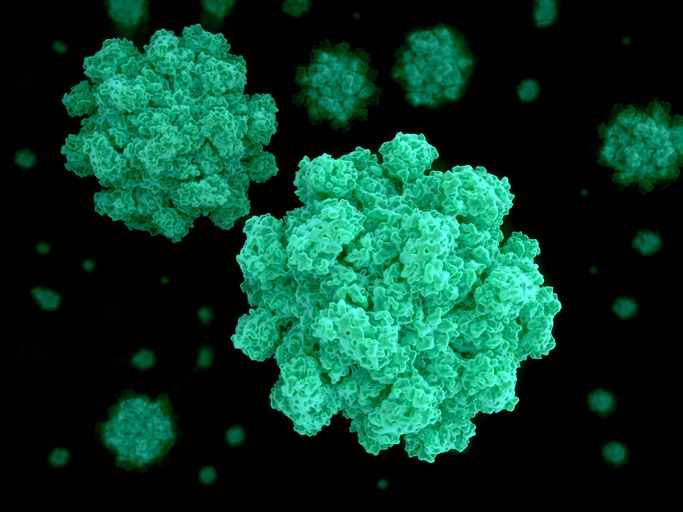
Norovirus is a highly contagious virus that causes acute gastroenteritis, resulting in severe stomach pain, vomiting, and watery diarrhea. Often referred to as the "stomach flu," norovirus was first identified in 1972 [7].
Norovirus is the leading cause of acute gastroenteritis worldwide, causing approximately 20 million cases in the United States annually [7]. Furthermore, health authorities estimate that norovirus causes nearly 50% of all foodborne disease outbreaks in the U.S. [6].
Because of its rapid onset, low infectious dose, and high environmental stability, facility managers in high-density environments—such as hospitals, schools, cruise ships, and hospitality venues—must implement comprehensive strategies to kill norovirus and prevent costly outbreaks.
How Norovirus Spreads: Surface, Contact, and Aerosol Routes
Norovirus transmits through direct contact with an infected individual, consuming contaminated food or water, touching contaminated surfaces, or inhaling aerosolized viral particles [1, 6b].
Primary Infection Factors:
- Low Infectious Dose: Norovirus is extremely infectious; ingesting as few as 18 to 20 viral particles can trigger clinical illness [9].
- Asymptomatic Shedding: Infected individuals shed massive quantities of viral particles during acute vomiting and diarrhea [1], and remain contagious for two weeks or more after symptoms resolve [5].
- Food Worker Transmission: Infected food handlers cause roughly 70% of foodborne norovirus outbreaks in the U.S., frequently through bare-hand contact with ready-to-eat foods [1].
- Airborne Aerosolization: When an infected person vomits, the violent action generates micro-aerosols containing viral particles [7, 8]. These aerosolized particles float through air currents, settle on high-touch surfaces like door handles and tables, or are inhaled directly by nearby individuals [8].
Clinical Proof of Airborne Norovirus Dispersal
A landmark study conducted by Université Laval across 8 hospitals and long-term care facilities evaluated airborne viral contamination during active outbreaks. Researchers detected airborne norovirus particles in 75% of the tested facilities [9].
Sampling revealed widespread viral dispersal:
- 54% of patient rooms housing gastroenteritis patients contained airborne norovirus.
- 38% of hallway corridors leading to patient rooms tested positive for airborne particles.
- 50% of nursing stations contained detectable concentrations of airborne norovirus.
Measured airborne concentrations ranged from 13 to 2,350 viral particles per cubic meter of air [9]. Given that 20 particles are sufficient to cause infection, unmitigated air handling systems expose patients, healthcare workers, and staff to severe contamination risks.
High-Density Outbreaks in Public Venues and Hospitality
While news reports frequently highlight cruise ship incidents, cruise ships account for only about 1% of all reported norovirus outbreaks [1]. The vast majority of major outbreaks occur in land-based public facilities, including restaurants, hotel casinos, schools, and healthcare wards.
Notable Documented Outbreaks:
- UK Restaurant Incident (Aerosol Spread): In a documented 1998 UK outbreak, a restaurant guest vomited on the floor. Despite prompt cleaning with liquid disinfectant and a mop, 44% of event attendees (56 out of 126 people) contracted norovirus over the following week due to airborne particle dispersal during the vomiting event [2].
- Las Vegas Casino Outbreaks: In 2018, the Southern Nevada Health District surveyed 300 individuals following a major norovirus outbreak at the Westgate Hotel and Casino [3]. Similar historical incidents include 250 infections at the Flamingo Hotel in 2004 and over 500 cases of sapovirus (a related gastroenteritis virus) in 2011 [3].
- Royal Caribbean Cruise Interruption (2019): A 2019 outbreak aboard the Oasis of the Seas infected 475 passengers and crew, forcing the cruise line to cancel the voyage two days into a week-long trip to fully sanitize the vessel [4].
Preventing Norovirus: Sanitize Surfaces AND Air
Standard protocols like frequent hand washing, isolation of sick individuals, and proper food handling are necessary first steps. However, surface-only cleaning cannot stop airborne aerosol transmission.
Relying solely on surface disinfection and hand washing is insufficient to control norovirus outbreaks. Facility strategies must incorporate continuous air purification to destroy airborne viral particles in real time [10].
Inactivating Airborne Norovirus with WellAir Technology
Mitigating norovirus requires a multi-layered indoor air quality approach combining continuous HVAC purification with localized in-room air disinfection:
- NanoStrike™ Plasma Technology: Portable Novaerus air disinfection units powered by patented NanoStrike™ technology use ultra-low energy plasma coils to destroy pathogens on contact. Independent testing verified a 99.99% reduction of MS2 Bacteriophage (a recognized viral surrogate for norovirus) alongside a 99.87% reduction of bacteria and 98.85% reduction of fungal spores [10].
- Whole-Building HVAC Ionization: Integrating Plasma Air HVAC ionization systems distributes active ions throughout ductwork to agglomerate fine particles, enhance MERV filtration efficiency, and neutralize pollutants facility-wide.
Whether managing healthcare wards, hotel casinos, schools, or commercial office spaces, combining active surface protocols with continuous air disinfection stops norovirus transmission.
Contact the WellAir team today to design a customized indoor air quality strategy for your facility.
Sources & References
- Centers for Disease Control and Prevention. (2014). Preventing Norovirus Outbreaks. CDC Vital Signs. Read CDC report.
- Bloom, J. (2017). To Avoid Norovirus, Keep Your Distance – Especially in Restaurants. American Council on Science and Health. Read article.
- Callahan, B. (2018). 300 Respond to Survey After Apparent Norovirus Outbreak at Westgate. KTNV Las Vegas. Read article.
- Ware, G. (2019). Norovirus Outbreak on Royal Caribbean Cruise Ships Sickens 475 Passengers. ABC News. Read article.
- Centers for Disease Control and Prevention. (2018). Norovirus Transmission. CDC. Read CDC guide.
- Centers for Disease Control and Prevention. (2024). Norovirus Outbreak Basics. CDC. Read guide.
- WebMD. (2019). Norovirus: Symptoms and Treatment. WebMD. Read guide.
- Shipman, M. (2015). Vomiting Device Offers First Direct Evidence that Vomit Aerosolizes Norovirus-Like Particles. North Carolina State University News. Read study summary.
- Bonifait, L., et al. (2015). Detection and Quantification of Airborne Norovirus During Outbreaks in Healthcare Facilities. Clinical Infectious Diseases, 61(3), 299-304. Oxford Academic. Read study.
- Université Laval. (2015). Noroviruses spread several meters by air. ScienceDaily. Read report.