Hand Hygiene and Healthcare-Acquired Infections: Limits and Solutions
Why Manual Hand Hygiene Compliance Lags and How Active Engineering Controls Bridge the Gap
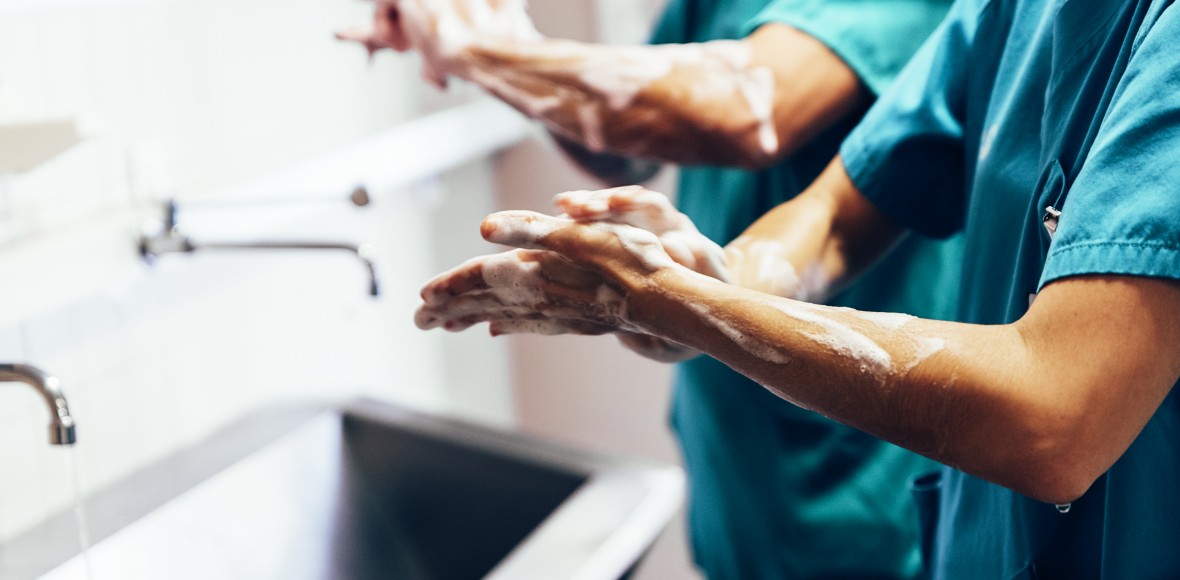
The Hand Hygiene Compliance Gap in Healthcare
Spend time in any hospital and you get the impression medical staff are scrupulous about hand hygiene. At every turn, clinicians appear to be applying hand rub, peeling off gloves, and scrubbing hands between patient interactions.
However, global compliance data tells a different story.
Hand hygiene compliance remains dangerously low according to the World Health Organization (WHO). Clinical studies consistently show healthcare workers underutilize alcohol hand rubs, miss wrists and thumbs, fail to rub for the recommended 20 to 30 seconds, or apply disinfectant to wet hands.
Key Clinical Compliance Findings:
- Missed Protocols: A European study revealed that 76% of healthcare workers miss at least one critical moment within WHO’s "Five Moments for Hand Hygiene."
- Pathogen Deposition Rate: Swiss clinical researchers calculated that doctor and nurse hands deposit potentially harmful microbes onto patient care surfaces every 4 seconds.
- Global Baseline: Even in advanced, resource-rich hospitals, WHO reports compliance is often well below 40%—and occasionally drops near zero.
Why Motivational Campaigns Fail to Fix Hand Hygiene
Hospitals have poured massive resources into compliance incentives, including educational videos, posters, gamification, and cash rewards. However, infection control experts note that purely motivational approaches fail to deliver sustained behavioral changes.
"Realistically, motivational campaigns do not work long-term," explains Dr. Ojan Assadian, M.D., President of the Austrian Society for Infection Control.
Behavioral distractions, perceived skin irritation from frequent washing, and the false sense of security provided by medical gloves all drive poor compliance.
The "Dirty Hand in the Latex Glove" Paradox
Research shows that hand hygiene compliance actually drops when healthcare workers wear gloves:
- British Clinical Trial: Hand hygiene compliance among physicians was 41% when wearing gloves, compared to 50% when un-gloved.
- Glove Protocol Failures: German-Ukrainian research found over 60% of clinicians failed to disinfect hands before donning gloves, and 80% skipped disinfection immediately after glove removal.
- Unconscious Touches (Camera Study): In a Swiss ICU study using head-mounted cameras during morning rounds, observed hand hygiene compliance ranged between just 1% and 5%, with a median hand-rub duration of only 11 seconds (against the 20–30 second guideline).
Pathogen Persistence and Glove-Doffing Contamination
Healthcare workers frequently underestimate how rapidly microbes populate intact skin and clinical environments. Pathogens can survive on human hands for hours, and contamination occurs even during routine, non-invasive tasks like taking pulse rate or blood pressure.
During acute care, contamination spikes dramatically. A French study showed that 24% of healthcare workers’ hands tested positive for Clostridium difficile spores after routine care of infected patients.
Furthermore, removing personal protective equipment (PPE) carries high self-contamination rates:
A Cleveland, Ohio study using fluorescent lotion and black-light tracking showed a 52.9% self-contamination rate on workers' skin and scrubs during standard glove and gown removal.
Proven Environmental Interventions to Boost Compliance
While behavioral modification has limits, environmental engineering adjustments implemented by the Joint Commission Center for Transforming Healthcare's Hand Hygiene Project have yielded measurable improvements:
- Dispenser Visibility: Painting wall backings in bright contrasting colors to highlight sanitizer station locations.
- Visual Cues: Marking threshold lines outside patient doors labeled "Sanatize or Don't Cross."
- Automated Dosing: Replacing manual pumps with touchless dispensers calibrated to squirt exact required volumes.
- Point-of-Care Placement: Placing wall units directly inside and outside every door alongside staging shelves for medical supplies.
The Hard Limits of Hand Hygiene: Why Air Disinfection Is Critical
Even if a hospital achieves perfect hand hygiene compliance, manual washing cannot stop all healthcare-associated infections (HAIs). In the Ohio PPE removal trial, skin and clothing contamination occurred 30% of the time even when correct protocol was followed.
Furthermore, pathogens frequently bypass human hands entirely through airborne transmission:
- Coughs, sneezes, and speaking generate bio-aerosols that remain suspended in air currents before landing on clean bed rails and food trays.
- Door openings, staff movement, and curtain pulls resuspend settled floor dust into breathing zones (the "Pig-Pen effect").
- Outdoor pollution, wild-type viruses, and fungal spores infiltrate HVAC intake lines and circulate through hallways.
Bridging the Gap with Active Plasma Technology
To break the infection cycle, hospitals must complement hand hygiene and surface wiping with continuous, 24/7 air disinfection. While standard HEPA filters only trap physical particles, active plasma technology destroys airborne pathogens at the molecular level on contact.
Novaerus air disinfection units powered by patented NanoStrike™ technology operate continuously around acute patients to inactivate viral capsids, bacterial cells, and fungal spores.
Review independent laboratory trials proving NanoStrike efficacy against C. diff, MRSA, norovirus, and airborne viruses.