Preventing Surgical Site Infections in the Operating Room: Part 1
Understanding the Airborne Vector in Operating Theatre Infections
The Invisible Vector in Surgical Site Infections
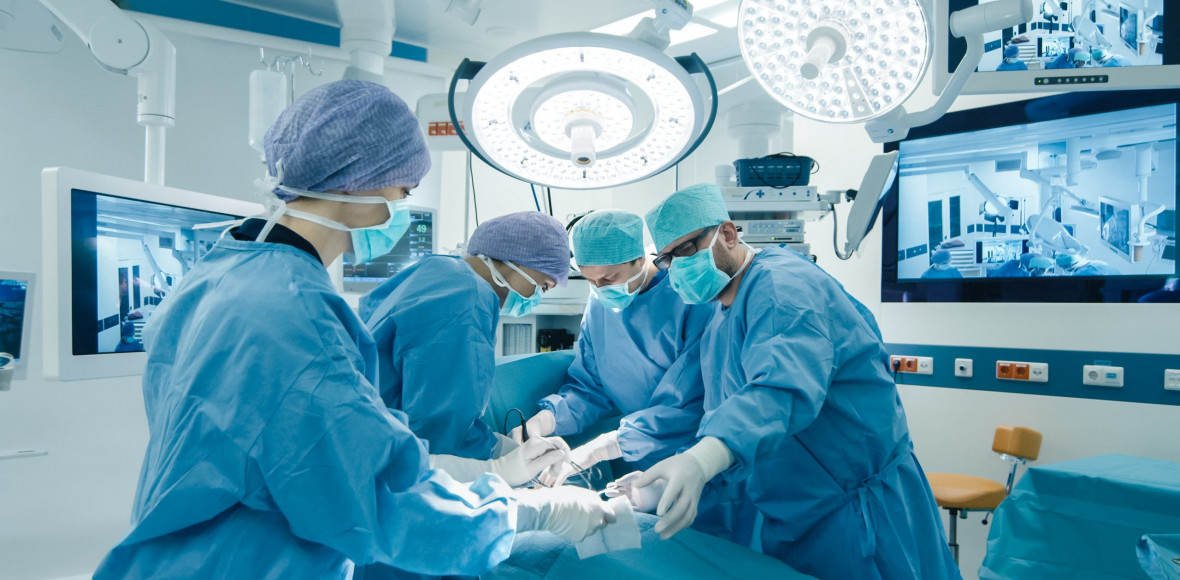
In an operating theatre at a Japanese hospital, two physicians and two nurses prepared for a simulated total knee replacement. As the team readied the instrument table, a high-sensitivity camera captured green laser-illuminated particle movement stirred up by their routine actions.
The surgical simulation study analyzed which staff movements generate the highest volume of airborne particles in the operating theatre (OT) and where those contaminants congregate.
Airborne particles—such as dust, lint fibers, skin squames, and respiratory bio-aerosols—transport bacteria onto surgical instruments, gloves, or directly into open surgical wounds.
The Global Cost and Mortality of Surgical Site Infections (SSI)
Surgical site infections (SSIs) remain among the costliest and most feared healthcare-associated infections (HAIs) worldwide:
- Global Prevalence: In low-income countries, over 10% of surgical patients develop SSIs, with C-sections and gastrointestinal surgeries carrying infection risks of 19% to 23%. In high-income nations, 2% to 4% of surgical patients acquire an infection, rising to 15% in emergency trauma cases.
- U.S. Inpatient Impact: In the United States, SSIs account for nearly 1 million additional inpatient hospital days each year, carrying a 3% mortality rate.
- High-Risk Regions: In African surgical wards, the mortality rate from SSIs reaches nearly 10%.
- Superbug Threats: Mortality rates spike when infections involve drug-resistant strains like Methicillin-resistant Staphylococcus aureus (MRSA).
Despite rigorous wound prep, instrument sterilization, and surface disinfection, clinical evidence indicates that 80% to 90% of SSI pathogens originate from airborne transmission.
"Contamination by airborne microorganisms plays a central role in the pathogenesis of surgical site infections," asserts French orthopedic surgeon Dominique Chauveaux.
Why Traditional OT Ventilation Is Not Enough
Writing in the American Journal of Infection Control, U.S. surgeons highlighted bacterial contamination of operating theatre air as an underappreciated factor in prosthetic joint infections.
Standard staff movements—removing gloves, cutting dressing tape, or opening drape packaging—release millions of particles into the air. When staff move around the room, turbulent air currents push gown particles down onto the operating table level.
While limiting personnel and reducing movement helps, traditional HVAC and HEPA filtration systems alone fail to eliminate microbial bio-aerosols during active procedures.
Surgeons argue that medical facilities must supplement traditional ventilation controls with innovative active air purification technologies that neutralize pathogens continuously.
Prosthetic Joint Infections: A High-Stakes Clinical Challenge
While all surgical procedures carry risk, periprosthetic joint infections (PJI) following hip and knee replacements are catastrophic.
Because artificial implants lack direct blood supply, immune cells and systemic antibiotics cannot reach localized bacterial colonies once established, making implants safe havens for bacteria.
PJI Risk Projections and Financial Impact:
- Surge Projections: Joint replacement procedures are projected to increase 13% by 2030, with a corresponding 14% rise in periprosthetic infections.
- Extreme Costs: Treating a single infected joint replacement can exceed $400,000, with a mortality rate between 2% and 7%.
- Revision Surgeries: Roughly 10% of all joint surgeries are revision procedures, where the infection risk escalates to 15%–20%.
- Other Specialties: A British neurosurgery study noted that 8% of neurosurgery patients acquired SSIs, with nearly half requiring secondary operations.