Plasma Air Improves Indoor Air Quality on Buses and Trains
DOWNLOAD THE FULL APPLICATION BRIEF

Bus transportation plays a crucial role in our nation's logistics, serving as a vital lifeline for millions. Public buses account for nearly half of all U.S. public transit trips, recording roughly 6.19 billion passenger trips annually.1
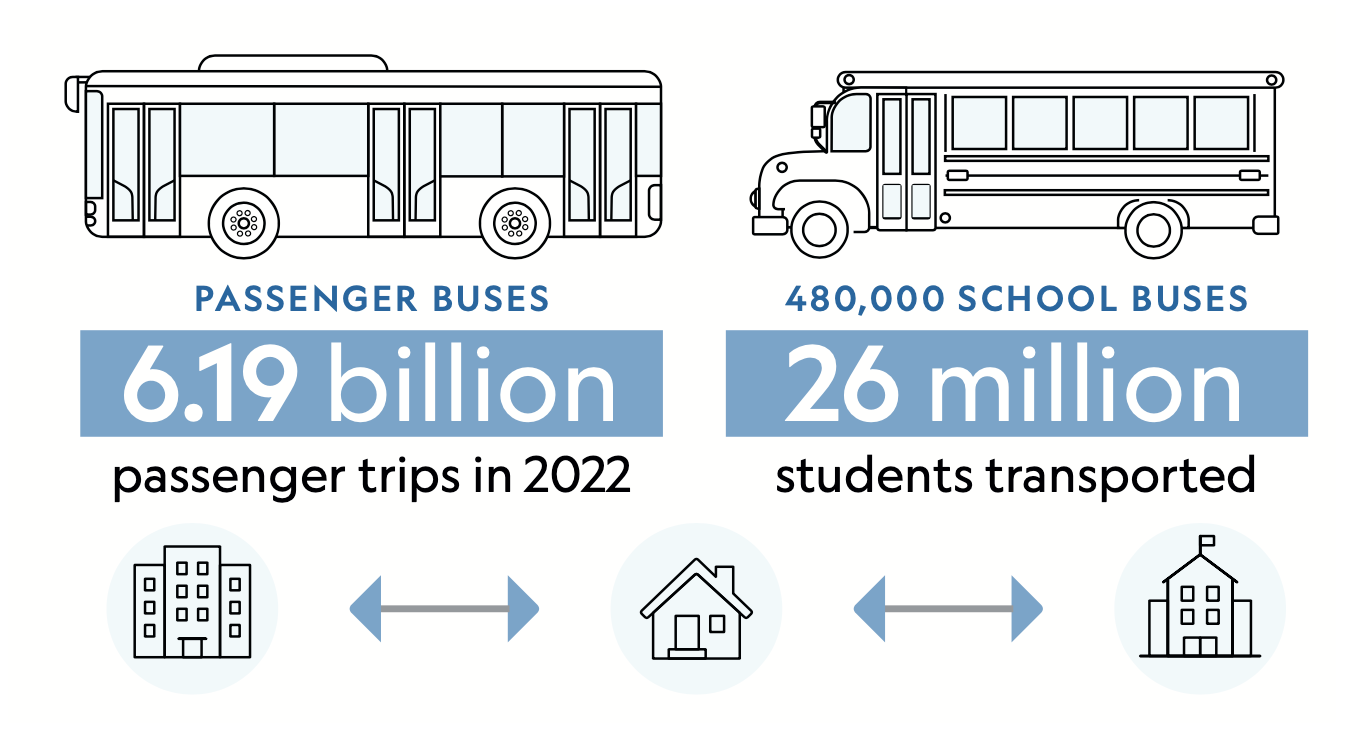
In addition, yellow school buses represent the largest public transportation fleet in the United States. More than 480,000 school buses transport roughly 26 million children to and from school every day.2
The Importance of Clean Air Inside Buses
While national efforts have focused heavily on reducing tailpipe emissions, indoor air quality (IAQ) inside the bus cabin is frequently overlooked. Exhaust and ambient roadway pollution enter the bus during frequent stops, remaining trapped inside even after doors close.
As a result, cabin concentrations of harmful traffic-related air pollutants often exceed safe levels, including:
- Fine and Ultrafine Particles: PM2.5 and UFPs that penetrate deep into lung tissue
- Volatile Organic Compounds (VOCs): Toxic gaseous chemicals from combustion and vehicle materials
- Nitrogen Dioxide (NO2) & Black Carbon: Direct combustion byproducts from diesel engines
Health Impacts of Traffic-Related Air Pollution (TRAP)
Chronic exposure to traffic-related air pollution is linked to serious respiratory and cardiovascular health risks3, including asthma exacerbation, reduced lung capacity, heart disease, and impaired cognitive development in children.4
A study by the Natural Resources Defense Council (NRDC) found that children riding diesel school buses may be exposed to up to 4 times more toxic diesel exhaust than bystanders outside, facing an estimated 23 to 46 times higher cancer risk than the U.S. EPA threshold for significance.5
Air Filtration Limitations on Public Transit
Most transit buses rely on standard HVAC filtration to clean cabin air. However, space constraints and lower MERV-rated filters limit their ability to remove fine particulate matter and airborne pathogens.6
“If the transportation system prioritizes maximum efficiency in cooling or heating the air within the cabin, it may reduce the air intake from outside, leading to higher concentrations of airborne pathogens and pollutants. Insufficient air mixing within the bus cabin can create an unsafe environment for prolonged exposure.”
— Mike Sherber, VP of Engineering at Plasma Air
Revolutionizing Air Purification on Buses and Trains
Plasma Air delivers continuous indoor air purification for transit systems by combining soft bipolar ionization technology with existing vehicle ventilation and filtration.
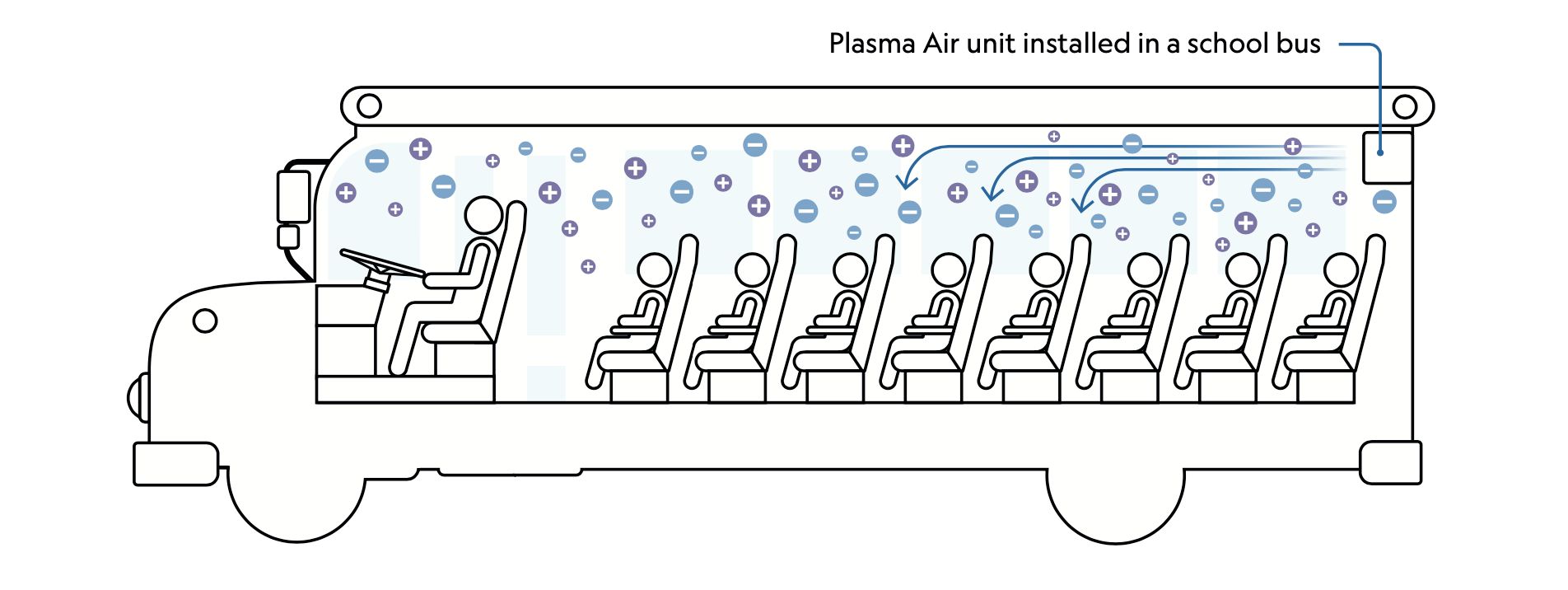
Bipolar ionization reproduces nature’s natural air cleaning process by generating positive and negative oxygen ions. These charged ions attach to airborne particles and pathogens, inactivating viruses and bacteria while causing fine particulate matter to clump together so filters can trap them more efficiently.
Proven Real-World Case Studies
- Kalamazoo Public Schools (Michigan): Outfitted its entire fleet of school buses with Plasma Air 600 Series purifiers, alongside building installations across 25 schools, creating a continuous protective envelope from ride to classroom.
- Zaragoza Tram System (Spain): A third-party study confirmed that Plasma Air technology reduced cabin VOC concentrations by 80% on high-volume transit cars.7
Contact Our Transit IAQ Specialists
To learn more about custom air purification retrofits for school bus fleets, municipal transit buses, or passenger rail systems, contact our team at info@wellairsolutions.com.