Not All Ionization Technologies Are the Same
CLICK HERE FOR THE FULL TECHNICAL BRIEF

Indoor air quality technologies such as soft ionization (bipolar ionization or BPI) are transforming air safety across commercial real estate, healthcare facilities, schools, hospitality venues, and residential spaces. When integrated with proper ventilation and physical filtration, soft ionization provides a safe, highly effective, and energy-efficient layer of protection against airborne contaminants.
How Soft Ionization Cleans Indoor Air
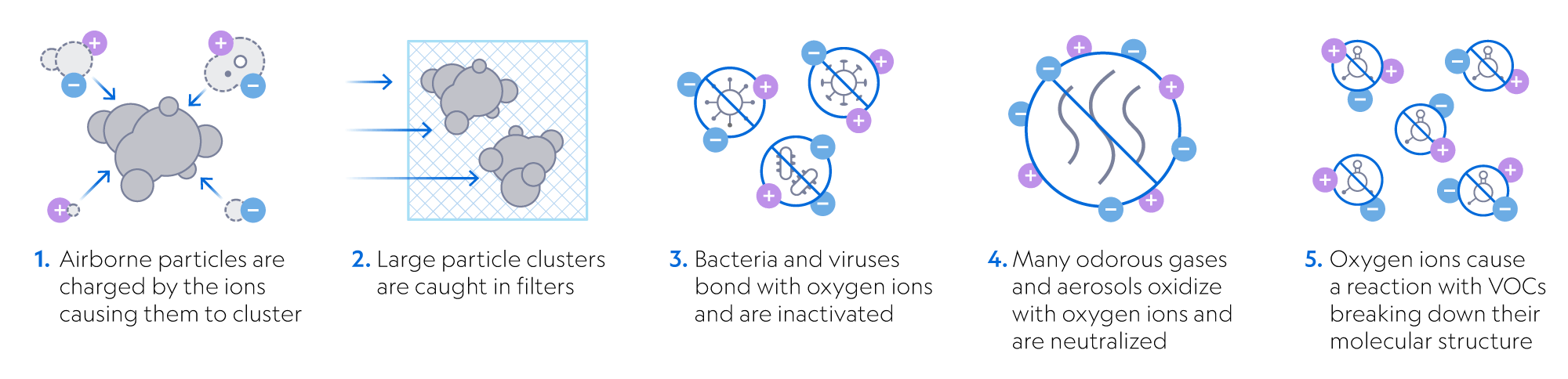
Ionization is a natural process in which oxygen molecules gain or lose electrons, creating positively and negatively charged ions. When deployed in HVAC systems or standalone air purification units, these active ions actively neutralize particulate matter, viruses, bacteria, odorous gases, aerosols, and volatile organic compounds (VOCs) like formaldehyde.
Additionally, ionization causes fine particulate matter to agglomerate (clump together), increasing its physical size so existing HVAC filtration systems can capture it far more effectively.
Soft Ionization vs. Hard Ionization: Key Differences
Understanding the distinction between energy delivery methods is critical when selecting an air cleaning technology for occupied spaces:
- Hard Ionization (High Energy): Uses strong electrical fields operating at high voltages. This splits air molecules into fragmented ion spectrums, generating harmful byproduct gases such as ozone. High ozone concentrations present significant health hazards to building occupants.
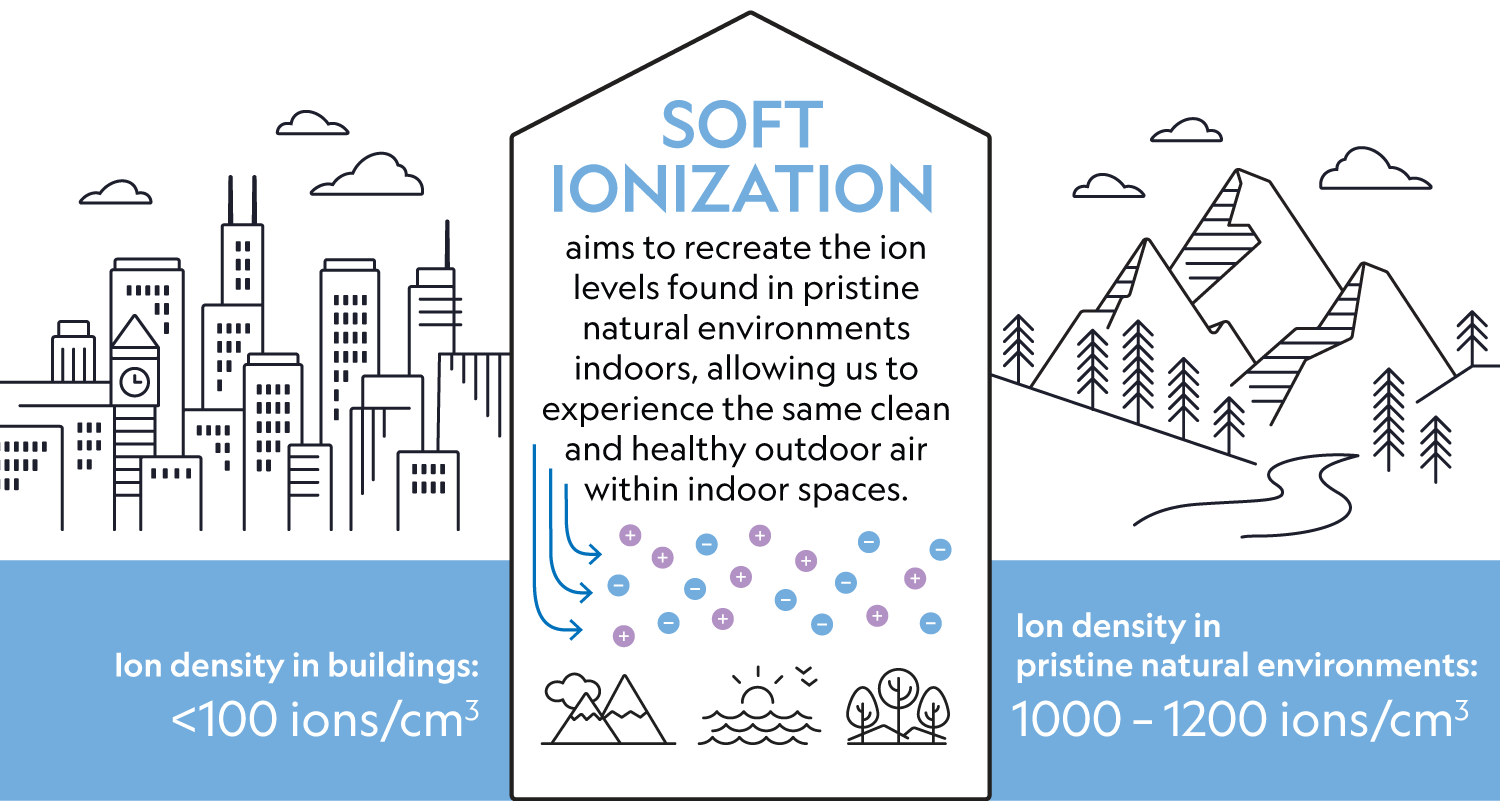
- Soft Ionization (Bipolar Ionization / BPI): Uses controlled, lower energy levels to preserve molecular integrity. It produces beneficial positive and negative oxygen ions that mirror pristine natural environments without generating harmful ozone or secondary pollutants.
8 Key Benefits of Soft Ionization (BPI)
- Continuous Air Cleaning: Operates continuously in occupied spaces, constantly releasing active ions that seek out and neutralize pathogens in real time.
- Effective Particle Removal: Causes fine dust, pollen, mold spores, and ultrafine particles to cluster, accelerating filtration and surface settling.
- Broad-Spectrum Neutralization: Deactivates VOCs, toxic aldehydes, and unpleasant gases (e.g., breaking ammonia down into harmless nitrogen gas and water vapor).
- Chemical-Free Operation: Relies on existing ambient oxygen molecules rather than consumable chemicals, reducing maintenance costs and ongoing supply needs.
- Microorganism Inactivation: Disrupts the outer cellular structures and surface proteins of viruses, bacteria, and fungal spores, rendering them non-viable.
- Targeted Odor Control: Breaks down complex volatile organic molecules responsible for persistent odors in kitchens, restrooms, and high-occupancy zones.
- Energy Conservation & Carbon Reduction: Enables the use of ASHRAE Standard 62.1 Indoor Air Quality Procedure (IAQP) to safely reduce required outdoor air intake—dramatically lowering heating, cooling, and carbon emissions.
- LEED Certification Support: Helps facilities satisfy rigorous indoor air quality standards required to gain credits toward LEED green building certification.
About WellAir and Plasma Air
Founded in 2007, Plasma Air has pioneered bipolar ionization solutions designed to restore clean, safe indoor environments worldwide. Learn more about WellAir and Plasma Air.
Today, our indoor air quality solutions protect over 400 million square feet across schools, universities, commercial office towers, healthcare systems, airports, and sports arenas.
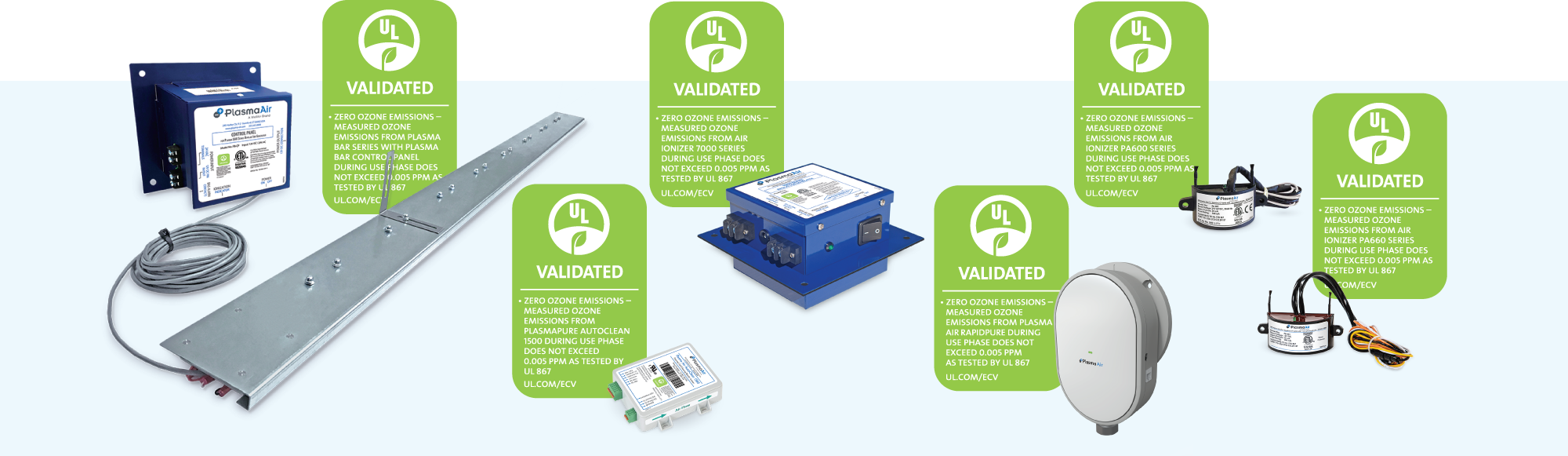
We maintain a transparent, science-based approach to air purification. Plasma Air soft ionization systems carry UL 2998 validation for zero ozone emissions and UL 867 safety certification for electrostatic air cleaners, giving engineers and facility leaders complete safety confidence.