Hospital Surfaces vs. Superbugs: What’s Missing?
Addressing Environmental Cleaning Failures, Pathogen Rebound, and Continuous Air Disinfection
The Hidden Limits of Hospital Surface Disinfection
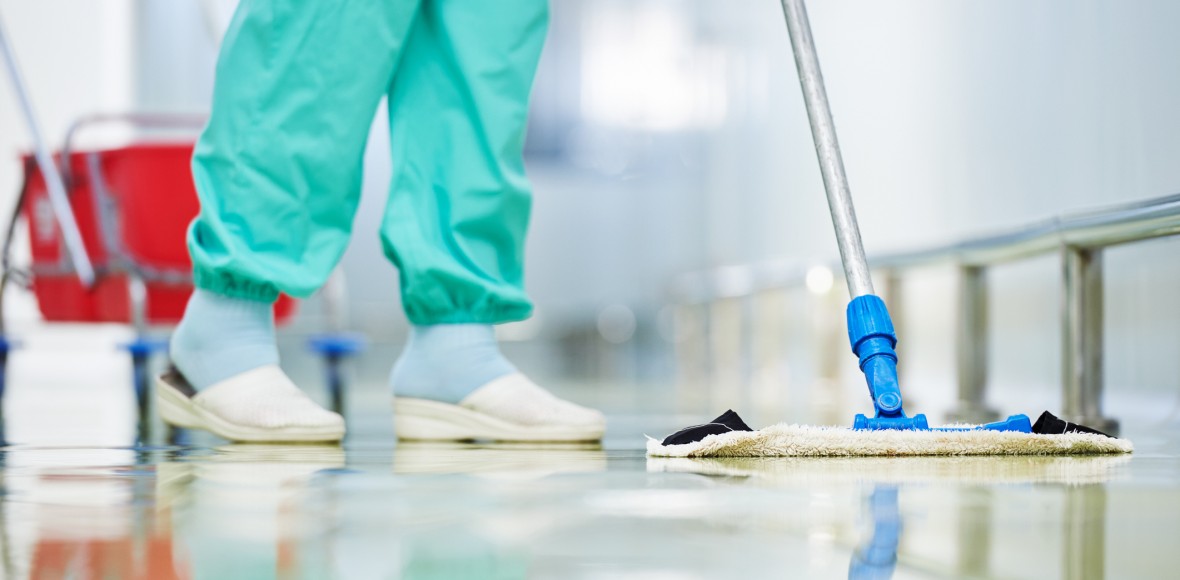
When a patient checks out of a room, environmental services (EVS) staff execute terminal cleaning protocols: wiping down bedframes, call buttons, TV remotes, closet handles, and door knobs. Bed linens and privacy curtains are removed for laundering, and fixtures are sanitized.
Despite strict cleaning protocols, healthcare-associated infections (HAIs) continue to spread:
- Elevated Occupant Risk: If a prior room occupant had Methicillin-Resistant Staphylococcus aureus (MRSA), the incoming patient faces a 40% elevated risk of acquiring the same infection, even when hospital cleaning protocols exceed standards.
- Facility-Wide Spread: As Cornell University researchers emphasize, "the danger extends far beyond the handful of patients who stay in that room," spreading across wards.
- Annual Morbidity and Mortality: Hospital pathogens infect 1.4 million patients and cause 140,000 deaths annually across Europe and the U.S.
"There is no easy way to clean a hospital or to keep it clean," cautions Scottish microbiologist Stephanie Dancer, M.D.
Why Clinical Surfaces Are Difficult to Keep Sterile
While increased surface cleaning can halt active outbreaks—such as a British hospital that contained MRSA by doubling cleaning hours or a Minnesota hospital that reduced C. difficile cases by 87% using bleach wipes—routine surface hygiene frequently falls short.
Key Factors Driving Surface Cleaning Failures
- High Rates of Missed Surfaces: A multi-hospital study found that over 50% of patient room surfaces were missed entirely during terminal cleans, with cleaning rates dropping below 30% for toilet handles, bedpan washers, and door knobs.
- Oversights in Medical Equipment: High-touch clinical gear—including blood pressure cuffs, ECG leads, ultrasound probes, and stethoscopes—frequently receives inconsistent or zero disinfection between patients.
- Human Error and Staff Overburden: Overworked staff under tight room turnover deadlines struggle to maintain required contact times for chemical disinfectants.
- Cross-Contamination via Cleaning Tools: Studies show that certain microfiber cloths and contaminated mop water merely redistribute pathogens across surfaces rather than removing them.
- Visual Inspection Limitations: Visual checks cannot detect microscopic pathogen loads. As research in the American Journal of Infection Control confirms, a surface can appear clean while harboring high microbial counts.
Rapid Pathogen Rebound: The 3-Hour Sterility Window
Even when surfaces are thoroughly disinfected by trained personnel, pathogens rapidly recolonize high-touch areas.
- Bed Rail Recolonization: A study in a South Carolina hospital measured bacterial loads on bed rails post-cleaning. Within 3 hours, bacterial burdens rebounded to unsafe levels, leading researchers to conclude that cleaning every 2 hours would be required to maintain safety thresholds.
- Glove Contamination Speed: A Chicago clinical trial revealed that gloved hands acquired Vancomycin-Resistant Enterococci (VRE) in 46% of handprint cultures after just 5 seconds of contact with bed rails.
- Resistant Strain Persistence: Certain superbugs, such as VRE and Acinetobacter baumannii, withstand repeated bleach disinfection. Studies show 50% of rooms remained contaminated with Acinetobacter even after extreme cleaning measures.
The Missing Defense: Continuous Air Disinfection
Surface cleaning alone cannot maintain sterile environments because bioaerosols continuously recontaminate high-touch surfaces. Coughing, sneezing, talking, and routine bed linen movement release millions of bioaerosols into room air, where convection currents carry them onto medical instruments, bed rails, and personnel.
"You can target the surface itself, which is difficult and time-consuming," notes Dr. Ojan Assadian, M.D., President of the Austrian Society for Infection Control, "or you can attack the vector that causes contamination of these surfaces."
To break this cycle, healthcare facilities deploy active, continuous air treatment systems powered by NanoStrike technology.
Benefits of Active Plasma Air Disinfection
- 24/7 Continuous Neutralization: Novaerus portable air disinfection units operate continuously in patient rooms and ICUs, inactivating airborne pathogens before they settle on clean surfaces.
- Human-Error Independent: Unlike manual surface wiping, active plasma units run constantly without depending on operator training or compliance.
- Peer-Reviewed Efficacy: Destroys airborne viruses, bacteria, and fungal spores on contact, reducing airborne pathogen levels in real-world clinical environments.
Conclusion: Intercepting Pathogens at the Vector
While hand hygiene and environmental surface cleaning remain fundamental pillars of infection control, they cannot keep pace with continuous bioaerosol deposition. Implementing active, 24/7 air disinfection provides the missing defense required to stop superbug transmission across healthcare facilities.
Explore WellAir independent research to review peer-reviewed clinical data on Novaerus Defend and Protect air disinfection systems.
Sources & References
- World Health Organization (WHO). Health Care-Associated Infections Fact Sheet. WHO Patient Safety. Read report.
- Clinical Microbiology Reviews. How Do We Assess Hospital Cleaning? American Society for Microbiology. Read study.
- American Journal of Infection Control (AJIC). Rebound of Microbial Burden on Hospital Bed Rails Post-Disinfection. AJIC. Read study.
- Journal of the American Medical Association (JAMA Internal Medicine). Infection Risk from Prior Room Occupants. JAMA Network. Read study.