The History of Bipolar Ionization and Plasma Air

About Plasma Air
Plasma Air was established in 2007 with a single commitment: providing clean, safe indoor air. This mission continues to guide our work alongside global distributors and engineers to deploy proven bipolar ionization solutions worldwide.
Today, our technology protects over 400 million square feet of indoor space across schools, universities, arenas, airports, corporate offices, and hotels.
We rely on transparent, science-backed product development to keep indoor spaces safe. Our needlepoint bipolar ionization solutions hold rigorous industry safety standard validations:
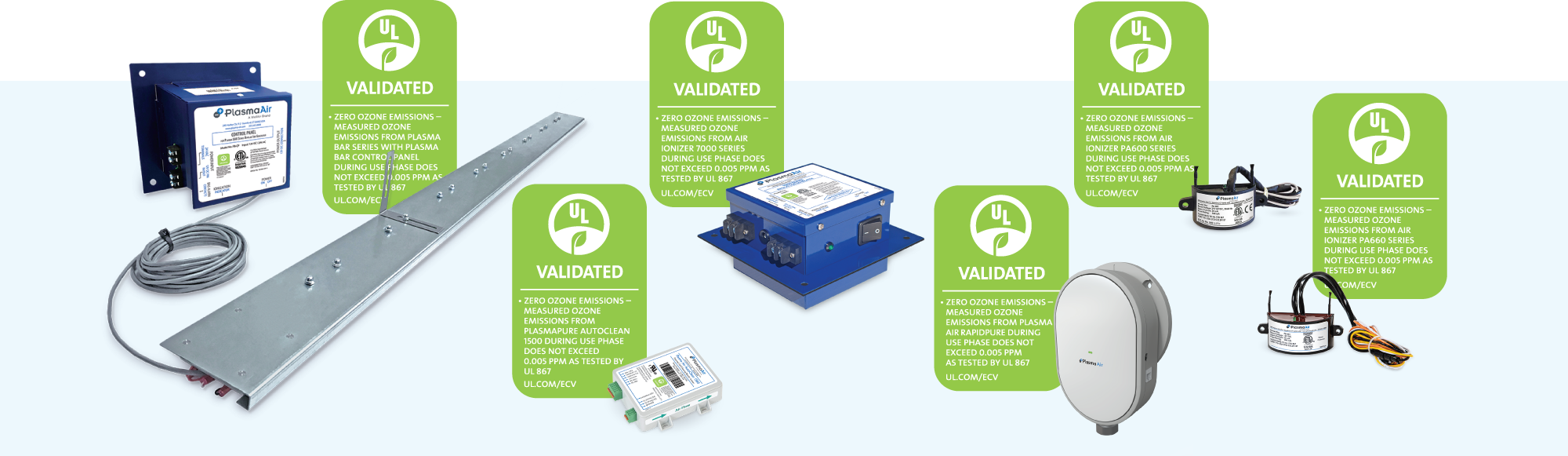
- UL 2998 Certification: Validated for zero ozone production.
- UL 867 Certification: Standard for safety in electrostatic air cleaners.
Ionization: A Historical Perspective
Bipolar ionization first entered US commercial use during the 1970s to control food manufacturing pathogens. However, air ionization itself is a natural phenomenon—strongest near crashing ocean waves, mountain ranges, waterfalls, and electrical storms.
Over the past 50 years, scientists and engineers have harnessed this process for indoor environments, generating hundreds of clinical trials, test reports, and case studies that demonstrate its safety and efficacy.
Soft Bipolar Ionization: How It Works
Plasma Air’s needlepoint soft bipolar ionization technology creates an artificial bio-climate rich in positive and negative oxygen ions:
- Unstable State: Negative ions contain an extra electron, while positive ions lack one.
- Neutralization Process: Seeking stability, these ions exchange electrons with airborne atoms and molecules.
- Pathogen Breakdown: This exchange inactivates bacteria, viruses, particulate matter, VOCs, and odorous gases in the breathing zone.
Needlepoint ionization relies on durable, corrosion-resistant emitters—utilizing materials like gold, carbon fiber, titanium, stainless steel, or silver.
Efficacy & Safety Research
Despite past industry misconceptions, an extensive body of peer-reviewed research supports the safety of ionization:
- The Jiang Paper: Evaluated 263 peer-reviewed studies and concluded there is no evidence of air ionization harming human health.
- Journal of Negative Results in Biomedicine: Reviewed 60 years of literature and confirmed no adverse impacts on respiratory, pulmonary, or metabolic function.
Independent lab tests consistently show that high-quality needlepoint bipolar ionization does not increase ozone, carbon dioxide, nitrogen dioxide, or fine particles. Instead, it reduces harmful pollutants to levels well below standard outdoor air.
Proven Pathogen Reduction
In testing conducted by FDA-accredited Aerosol Research and Engineering Labs and the Spanish Ministry of Defense, the Plasma Air 600 Series reduced aerosolized MS2 Bacteriophage (a SARS-CoV-2 surrogate) by 99%.
All core product lines—including RapidPURE, 600/660 Series, 7000 Series, BAR, and AutoClean—meet ASHRAE engineering standards and maintain UL 2998 zero-ozone validation.
CDC Guidance & Safety Validation
When selecting bipolar ionization equipment, verify that systems hold UL 2998 standard certification (Environmental Claim Validation Procedure for Zero Ozone Emissions from Air Cleaners) to ensure no harmful ozone levels are released into occupied spaces.