Aspergillus: A Deadly Superfungus – Part 2
Read Aspergillus: A Deadly Superfungus on the Rise – Part 1
Environmental Dispersal Mechanisms in Healthcare Facilities
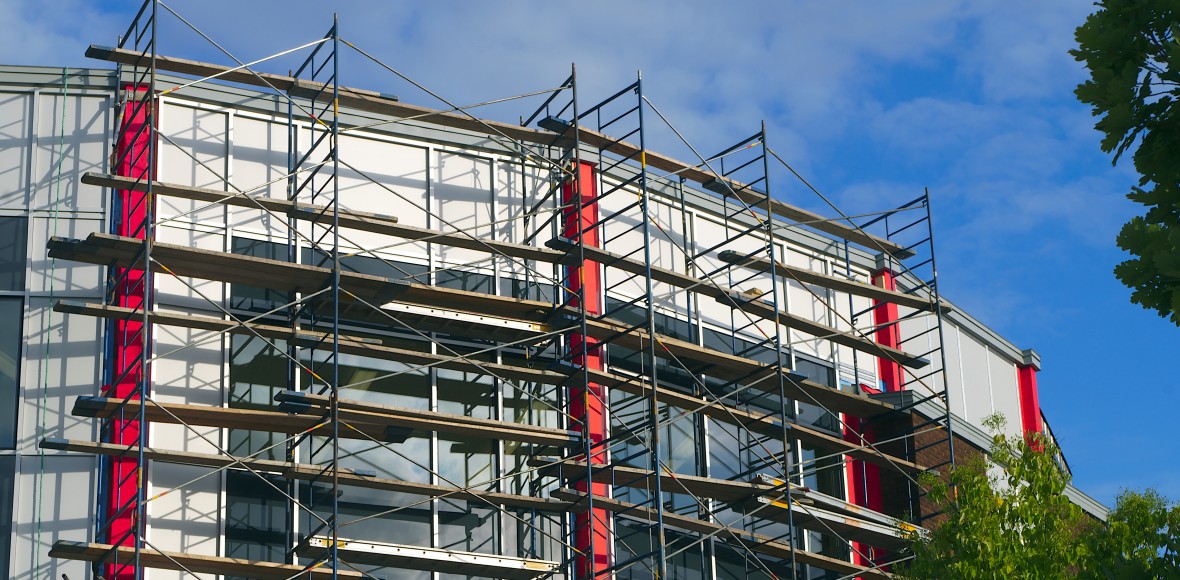
Approximately half of documented hospital Aspergillus outbreaks originate from active healthcare construction, demolition, or structural renovations.
Routine hospital maintenance activities—including ceiling tile removal, flooring replacement, soil excavation, electrical work above drop ceilings, and duct servicing—unleash massive loads of fungal spores into indoor air currents.
However, secondary environmental sources frequently trigger outbreaks in non-construction settings. Many healthcare-acquired clusters stem from improperly operated or poorly maintained HVAC ventilation systems. In one clinical instance, four neonates in an intensive care unit (NICU) contracted invasive aspergillosis linked to airborne contamination within incubator chambers fed by compromised air handlers.
Standard housekeeping practices—including dry mopping, vacuuming without HEPA filtration, and basic HVAC filter changes—can re-suspend microscopic Aspergillus spores into convection currents, allowing them to travel freely across distant clinical departments.
Unlike localized bacterial outbreaks, tracking the point source of airborne fungal contamination presents significant diagnostic challenges. A retrospective study of 81 aspergillosis cases in a French hospital revealed that the fungus infected patients across seven separate wards on multiple floors, confirming a diffuse, facility-wide environmental vector.
Agricultural Fungicides and the Agricultural Origin of Superfungi
The standard clinical treatment for invasive aspergillosis relies on triazole antifungal medications. However, overall mortality remains between 40% and 90% in high-risk patient groups, making the rapid global spread of triazole-resistant strains a grave medical concern.
Epidemiological data indicate that azole resistance in Aspergillus fumigatus is evolving into a global public health threat, associated with elevated treatment failure and increased patient mortality.
Similar to how antibiotic overuse in livestock fuels bacterial superbug evolution, widespread agricultural triazole application drives environmental resistance in fungal species. Agricultural azoles used for crop protection share a identical chemical backbone with clinical triazoles.
Research confirms that agricultural azole exposure directly contributes to medical treatment failure in antifungal-naive patients. In Western Europe, triazole resistance rates hover around 5% to 6%, with resistant environmental and clinical strains identified across Europe, Asia, the Middle East, and Australia.
Proactive Air Disinfection and Outbreak Prevention
Because new antifungal drug classes require years of clinical development, hospitals must rely on containment protocols to protect susceptible patients from airborne spore exposure.
Construction management standards mandate dust containment, negative air pressure zones, sealed transport pathways, and isolated worker entrances. However, as public health agencies note, physical containment barriers alone are rarely sufficient to eliminate risk during major structural renovations.
To eliminate background spore concentrations, medical facilities deploy continuous air disinfection technologies, such as Novaerus NanoStrike™ plasma technology. Independent clinical testing demonstrates that Novaerus units rapidly eradicate viable fungal spores from airborne environments.
In controlled chamber trials replicating high-contamination scenarios, Novaerus plasma technology achieved a 99.9% reduction of airborne Aspergillus niger spores within 30 minutes, reaching undetectable levels by 60 minutes.
Unlike episodic fogging or chemical spraying, Novaerus portable air purification units operate continuously in occupied spaces, inactivating fungal spores alongside viral and bacterial pathogens including MRSA, C. difficile, influenza, and tuberculosis.
Financial and Clinical Outcomes
Invasive fungal infections exact a heavy economic burden on healthcare systems. Research published in Clinical Infectious Diseases indicates that hospital-acquired aspergillosis adds an average of $15,000 in direct medical costs per infected patient. Furthermore, affected patients are 40% more likely to require 30-day emergency readmission.
By installing continuous air disinfection systems in high-risk zones—including operating suites, bone marrow transplant units, ICUs, NICUs, and crowded waiting areas—healthcare facilities establish proactive protection against airborne fungal outbreaks. Explore clinical air disinfection solutions for healthcare facilities.