Mold: Overlooked, Toxic, and on the Rise

When Benjamin Bryce, a dorm advisor at Vanderbilt University, developed a sore throat and shortness of breath, he assumed he had COVID-19. After testing negative, he noticed his symptoms vanished whenever he slept off-campus.
Returning to his room, Bryce discovered black mold surrounding pipes. Laboratory testing confirmed the problem: airborne mold, a rising health menace across college dorms, K-12 classrooms, hotels, and commercial buildings.
While viral transmission dominated public health attention in recent years, mold remains an overlooked airborne threat. As weather patterns become hotter and wetter, mold growth increasingly disrupts facility operations, inflates remediation budgets, and generates negative publicity.
Rising Operational and Financial Impacts:
- Higher Education: Students facing respiratory symptoms have staged protests and slept in tents to highlight poor living conditions. Over three years, news reports documented mold issues across 124 colleges.
- K-12 Schools: Humid summers frequently delay fall school openings, while teachers with asthma have filed claims over workplace exposure.
- Hospitality: Guests share viral videos of musty hotel rooms, threatening brand reputation.
The World Health Organization (WHO) warns that indoor dampness and mold increase risks of asthma attacks, respiratory infections, and chronic inflammation.
What Is Mold and Where Does It Grow?
In nature, mold (microscopic fungi) breaks down fallen leaves and organic matter. Indoors, however, mold damages building structures and compromises air quality.
Mold reproduces by releasing microscopic airborne spores. When a spore lands on a damp surface, it sprouts roots and establishes a colony.

Mold occurs in both aging infrastructure and modern, well-managed facilities. When researchers sampled air across 180 classrooms in 12 Boston schools, mold was present in every room regardless of building age.
Common Indoor Mold Species:
- Aspergillus: A yellow-green mold that grows in thick layers on damp walls. Learn how Plasma Air reduces Aspergillus.
- Penicillium: A bluish-green mold with a velvety texture that propagates on ceiling tiles and wood.
- Cladosporium: An olive-green mold that thrives in carpets and tolerates cold temperatures.
- Aureobasidium: A pinkish-brown mold commonly found on wet wooden surfaces.
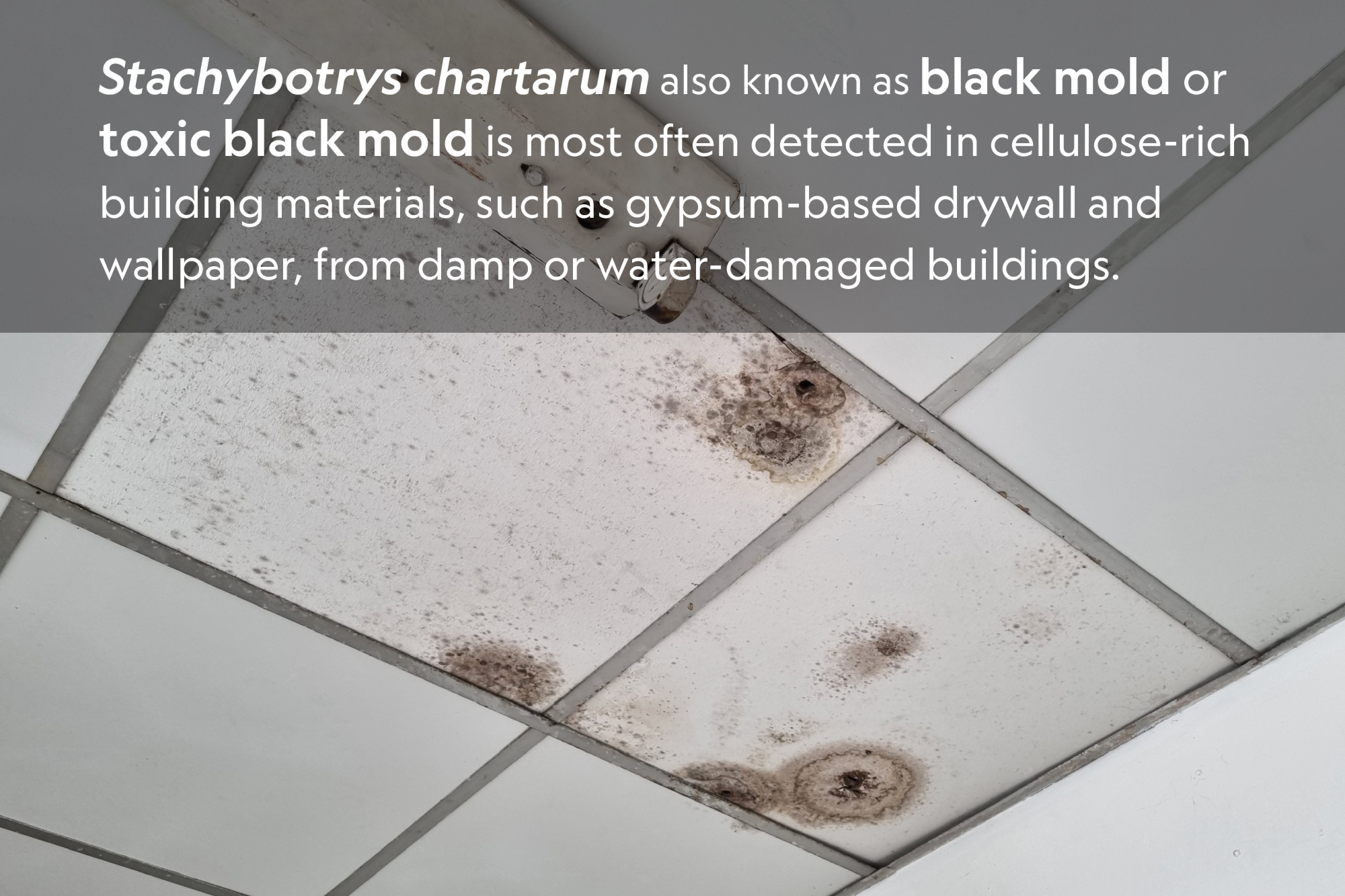
- Stachybotrys: Known as "toxic black mold," this slimy variety infests drywall, wallpaper, and insulation backing.
Health Hazards of Indoor Mold Exposure
While visible mold is unsightly, microscopic airborne spores pose the primary threat to human health. Because humans draw approximately 22,000 breaths per day, trapped spores provide continuous exposure.
The U.S. Environmental Protection Agency (EPA) confirms that mold irritates the eyes, skin, nose, throat, and lungs in both allergic and non-allergic individuals.
Documented Health Risks Include:
- Allergic Reactions: Affecting roughly 10% of the population, triggering coughing, sneezing, watery eyes, fatigue, and shortness of breath.
- Asthma Development: Research indicates mold exposure promotes asthma development in healthy children and triggers severe attacks in asthmatic individuals.
- Complicated Infections: In immunocompromised individuals or patients with COPD, fungal spores cause lung inflammation and increase susceptibility to secondary pneumonia.
Combating Airborne Mold Spores
The World Health Organization emphasizes that no safe threshold for airborne mold exists; prevention and rapid airborne destruction are essential.
Because tiny mold spores can pass through standard physical filters, relying solely on mechanical filtration is often insufficient. Comprehensive air cleaning requires active in-duct purification alongside portable air disinfection.
1. Continuous HVAC Air Purification (Bipolar Ionization)
WellAir's Plasma Air in-duct soft ionization systems release millions of positive and negative oxygen ions throughout building ductwork. These charged ions cluster around airborne mold spores, deactivating them on a cellular level so they can no longer reproduce.

2. Rapid Breathing-Zone Disinfection (NanoStrike™ Technology)
For targeted, localized protection, Novaerus portable air disinfection units utilize patented NanoStrike™ technology. NanoStrike destroys airborne mold spores at the cellular level within nanoseconds, preventing surface settlement and spore circulation.
